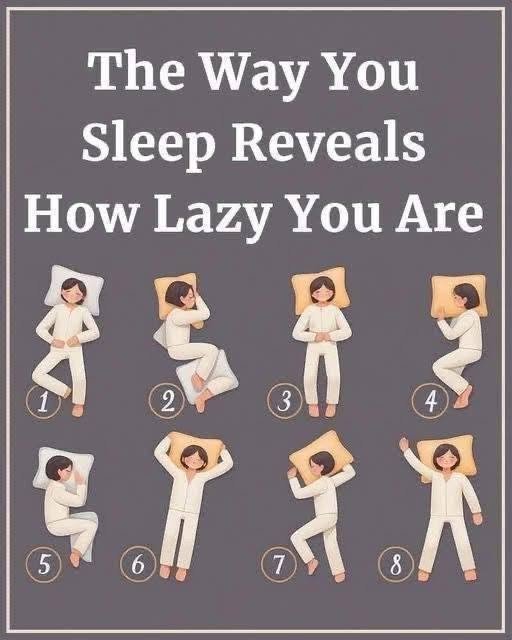
You’ve probably seen those viral claims: “If you sleep like this, you’re lazy.” It sounds intriguing—and maybe a little alarming. But is there any truth behind it?According to research in psychology and sleep science, your sleep position can reflect certain comfort preferences, physical needs, or subtle personality tendencies—but labeling someone as “lazy” based on how they sleep is a significant oversimplification.Let’s break down what your sleep position really says—and what it definitely doesn’t—with clarity, compassion, and evidence-based insight.Cultural ContextThroughout history, sleep has been both a biological necessity and a cultural mirror. In some traditions, sleeping posture was tied to spiritual beliefs or health philosophies—from Ayurvedic recommendations to medieval European humoral theory. Today, social media has revived fascination with sleep positions, often packaging complex human behavior into catchy, shareable myths. While these viral claims can spark curiosity, they frequently blur the line between playful observation and pseudoscience. This article honors that curiosity while grounding the conversation in research: not to debunk your habits, but to help you understand them with nuance and self-compassion.Why This MattersReduces self-judgment: Understanding the real factors behind sleep posture helps replace shame with self-awareness.Promotes better sleep hygiene: Knowing what influences your position can guide healthier choices for rest and recovery.Counters harmful stereotypes: “Laziness” is rarely about posture—it’s often about energy, mental health, or unmet needs.Encourages body literacy: Listening to how your body naturally settles can reveal clues about comfort, stress, or physical health.Supports compassionate curiosity: Asking “why?” about your habits opens the door to gentle, sustainable change—if you choose it.First Things First: Sleep Position ≠ LazinessRecipe subscription box
FIRST THINGS FIRST: SLEEP POSITION ≠ LAZINESS
Laziness isn’t something that can be diagnosed by how you sleep. In fact, sleep position is influenced by a constellation of factors:
Physical comfort and body structure
Habit, routine, and learned behaviors
Health conditions (like back pain, sleep apnea, or pregnancy)
Stress levels, emotional state, and sleep environment
While your sleep style might offer small clues about preferences or tendencies, it doesn’t define your motivation, work ethic, creativity, or energy levels. Sleep is a state of restoration—not a personality audit.
COMMON SLEEP POSITIONS & WHAT RESEARCH SUGGESTS THEY MAY REFLECT
1. THE FETAL POSITION (CURLED UP ON YOUR SIDE)
One of the most common sleeping postures worldwide.
What it may suggest:
A preference for comfort, security, or emotional grounding
Sensitivity or heightened awareness of surroundings
A natural response to stress or the need for self-soothing
The myth: Some claim this “passive” posture signals laziness.
The reality: It’s simply a cozy, protective position many bodies find naturally relaxing—especially after long days.
2. THE LOG POSITION (STRAIGHT ON YOUR SIDE, ARMS DOWN)
Sleeping on your side with arms resting alongside your body.
Possible associations:
An easygoing, adaptable temperament
A trusting, socially open nature
A preference for simplicity and low-stimulation environments
Note: This position is often linked with restful, uninterrupted sleep—not inactivity.
3. THE HUGGER (SIDE-SLEEPING WITH ARMS FORWARD)
Like reaching out or embracing a pillow.
What it may reflect:
An open-minded, thoughtful disposition
A tendency to process emotions or decisions carefully
A desire for connection or tactile comfort
Clarification: Nothing here points to laziness—just a reflection of how you seek ease.
4. THE SOLDIER (FLAT ON YOUR BACK, ARMS AT SIDES)
A structured, symmetrical sleeping posture.
Possible traits:
A preference for order, routine, or quiet environments
A reserved or self-contained approach to challenges
Physical comfort with spinal alignment (when supported properly)
Context: This position is often chosen for practical reasons—like reducing neck strain—not as a statement about ambition.
5. THE STARFISH (ON YOUR BACK, ARMS SPREAD OUT)
A relaxed, open posture that takes up space.
What it may suggest:
A supportive, generous interpersonal style
Comfort in your environment and with vulnerability
A tendency to prioritize ease and emotional openness
Reality check: Far from lazy, this position often reflects confidence and physical ease.
6. THE FREEFALL (ON YOUR STOMACH, ARMS AROUND PILLOW)
Face down with arms tucked or wrapped.
Possible associations:
A bold, outgoing, or action-oriented temperament
Sensitivity to criticism or a desire for control
See next page
For Complete Cooking STEPS Please Head On Over To Next Page Or Open button (>)